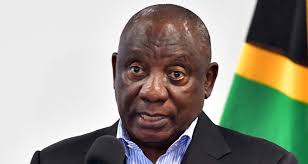
President Cyril Ramphosa is set to address South Africa’s Just Energy Transition (JET) Key Capital Holders on Monday (October 7th) during the United Nations Framework Convention on Climate Change (COP27 ) in Egypt.
The conference started on Sunday November 6th and will continue until November 18th. According to the presidency, Ramaphosa is expected to participate in roundtables on the country’s JET and, later in the week, will deliver a national statement, with Eskom as a hot topic of discussion and the possible loss of jobs as another.
Rich countries, crucial to financing South Africa’s move away from fossil fuels, especially coal, will be there and waiting to be convinced that South Africa has done enough to secure financing.
Last year, Western countries including the United States, United Kingdom, European Union, Germany and France pledged $8.5 billion to bolster national energy supplies.
Funding has, however, become harder to secure than expected, with the South African government admitting last month that it had underestimated the complexity of the offer at the time it was made.
“Several development partners and institutions are involved, and they have their own terms and conditions depending on their individual budget cycles,” he said.
It was demanded that the government provide a detailed and thorough plan on how it plans to use and allocate the funds if received.
On November 4, Ramaphosa, under the aegis of the President’s Climate Commission, released a master plan for South Africa’s energy transition. The new investment plan lays the groundwork for how the $8.5 billion will be spent and focuses specifically on power infrastructure.
The investment plan foresees that 90% of all funding will be used for the dismantling of coal-fired power plants and the development of new renewable energy systems.
Eskom has been a sore spot not only for South Africa because of its inability to provide stable electricity, but also because it is the world’s largest emitter of sulfur dioxide and relies primarily on coal.
When looking at JET, social issues arise when you take into account that 90,000 people are employed by coal mines in South Africa, and there are more employees for the companies who depend solely on coal.
National figureheads such as energy minister Gwede Mantashe pushed back against the deal but were later defeated. As reported by EWN, speaking as Ramaphosa was in Egypt, Mantashe noted that JET should not come at the expense of mining communities.
“This transition should not be insensitive to people in communities. You can’t just talk about transition and ignore that the bidding was continually in Mpumalanga in the coal belt…there will be ghost towns…starving families, and transition needs to address these issues.
Under JET, the government has put in place measures to ensure social stability and protection of livelihoods – these will also be taken into account by Western donors.
Finance Minister Enoch Godongawna said even Eskom itself had developed a comprehensive JET strategy, giving equal importance to the “transition to low-carbon technologies and the ability to do so in a “fair” and sustainable manner.
This follows Godongwana showing the President of the World Bank, another donor to South Africa’s just transition, around the recently decommissioned Komati Power Station.
“Komati is set to become South Africa’s first major coal-fired power station to be converted into a renewable energy generation site as the country gradually transitions from fossil fuels to clean energy resources,” the official said. head of the national treasury.