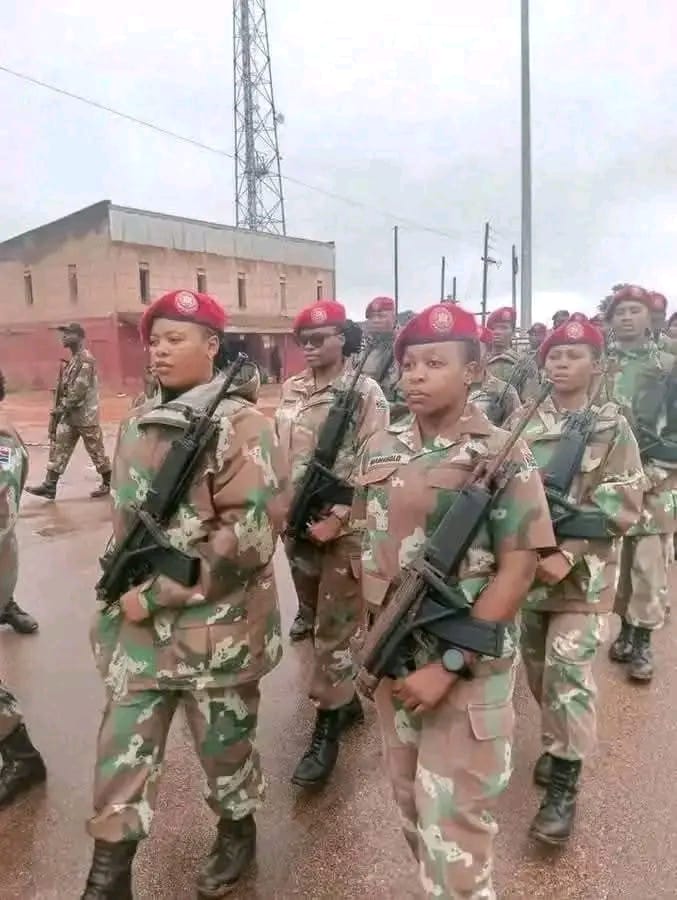
In late January, 14 soldiers of the South African National Defence Force (SANDF) lost their lives while fighting M23 (Mouvement du 23 Mars) rebels in and around Goma, DR Congo (DRC).*
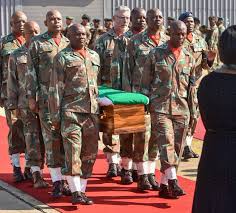
The 14 soldiers were part of the SANDF-led Southern African Development Community (SADC) Mission in DR Congo (SAMIDRC), deployed on 15 December 2023 “to support the Government of the DRC to restore peace and security in the eastern DRC, which has witnessed an increase in conflicts and instability caused by the resurgence of armed groups,” as well as with the United Nations Stabilisation Mission in the DRC (MONUSCO).
South Africa’s CMR and defence leadership in the limelight
Like the death of 13 SANDF soldiers in the Central African Republic (CAR) in 2013 (during what has come to be known as The Battle of Bangui), and the more recent domestic SANDF deployments during the COVID-19 pandemic and the violence and looting that gripped Kwazulu-Natal and Gauteng after the incarceration of former South African president Jacob Zuma, the 14 South African soldiers that died fighting M23 in DRC has brought South Africa’s civil-military relations (CMR) into the limelight.
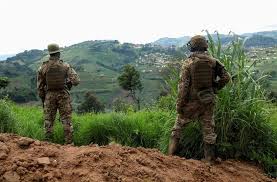
Understandably and necessarily so, many news reports and commentaries have covered recent developments in the DRC. If, according to leadership expert John Maxwell, “Everything rises and falls on leadership,” the analyses and opinions focused on the deaths of, and developments surrounding, South Africa’s fallen soldiers, will be an indirect commentary on South Africa’s defence leadership.
Who or what is South Africa’s defence leadership?
Broadly speaking, by ‘defence leadership’, I mean the South African actors that can or do exercise formal or informal influence over South Africa’s civil-military relations, with implications for South Africa’s defence foreign policy and military operations (domestic and abroad).
Defence leadership is, therefore, broader than military leadership, simply defined as ‘leaders in uniform’. Therefore, at the time of writing, South Africa’s defence leadership includes but is not necessarily limited to:
- the President and Commander-in-Chief, Cyril Ramaphosa;
- the civilian leadership of the Department of Defence and Military Veterans (DoDMV), Minister of Defence and Military Veterans, Angie Motshekga, her Deputies, Bantu Holomisa and Richard Mkhungo, and Acting Secretary for Defence, Dr Thobekile Gamede;
- the Chief SANDF, General Rudzani Maphwanya, the broader Military Command Council [that SANDF organ made up of the Chief SANDF, the Chiefs of the Services and Divisions of the SANDF (SA Army, SA Navy, SA Air Force and the South African Military Health Service) and the respective Chiefs of Joint Operations, Defence Intelligence, Logistics, Human Resources, and Staff], some of whom serve in different capacities on the DoDMV senior management team under the leadership of the civilian ministers and the Secretary of Defence, and the SAMIDRC Force Commanders (Major General Monwabisi Dyakopu and later, Colonel Thembekile Nqukuva);
- parliament’s Portfolio Committee on Defence and Military Veterans (PCDMV) and Joint Standing Committee on Defence (JSCD);
- the Department of International Relations and Cooperation (DIRCO);
- members of South Africa’s defence industry; and
- civil society actors and organisations, including, for example, the media and academic/research institutions.
Soldier deaths: a moment for critical reflection and assessment
Death is an inescapable reality of the human condition. Given the nature of the military profession, when one joins the military, one accepts, knowingly or not, that the risk of experiencing a ‘premature’ death, and a violent one at that, increases.
Therefore, defence leaders are not automatically responsible, in any negative sense, for the death of soldiers. When one chooses to lead in the defence space, one chooses, knowingly or not, to influence, among other things, the political reasons why soldiers die, the context in which soldiers die, and the consequences of soldiers dying.
Nevertheless, or perhaps because of this responsibility, the death of any number of soldiers in the armed forces of a country where the state wishes to acknowledge and respect human dignity warrants critical questions that can help develop the country’s defence leadership and hold it accountable. The death of 14 SANDF soldiers in the DRC is necessarily an opportunity to critically reflect on and assess defence leadership in South Africa.
For example, could the soldier deaths have been avoided and if so, how? Did the soldiers who died sacrifice themselves for something worthwhile? In other words, did their deaths contribute to something of significant value to the benefit of South Africans collectively? Were the soldiers who died, and their families, properly honoured for the sacrifices made? Are they still being honoured?
The “leadership multiplex”
When asking these questions to develop defence leadership and hold it accountable, it is important to remember that leadership doesn’t happen in a vacuum. In their conceptualisation of “leadership”, Jordans, Ng’weno, and Spencer-Oatey (2020) refer to a “leadership multiplex”.
At the centre of this “leadership multiplex” is “Enactment of Leadership” and surrounding it are “Purpose,” “Followers”, “Context” and “Leader”. In other words, what leadership looks like and what the consequences of leadership are, depends at least on purpose, followers, context, the leader or leaders, and the interconnectedness of these leadership variables, including across history.
For example – even if by some miracle, South Africa’s Government of National Unity (GNU) possessed the wherewithal to drive the much-needed reform of the SANDF (however this might be defined – see here, here, and here, for example), it hasn’t necessarily been in power long enough to have avoided the calamity in the DRC.
Furthermore, for the most virtuous and competent GNU efforts to have achieved the necessary reform in the required time, South Africa’s military leadership would have to have been willing to turn the proverbial ship around and pull its weight.
Further caveats
In this article, I don’t attempt to determine comprehensively what the death of 14 SANDF soldiers in the DRC and related developments reveal about South Africa’s defence leadership, nor do I pretend to have engaged all sources reporting or commenting on the loss of SANDF soldiers.
To the degree I have engaged sources, they don’t necessarily speak to all the actors that constitute South Africa’s defence leadership, who need to give an account for South Africa’s losses in the DRC. Finally, this article doesn’t necessarily include the latest developments concerning the soldier deaths and SAMIDRC more broadly, at the time of writing.
Rather, as a start to what could and should probably be a more elaborate work, I ask in this article what I hope are critical questions, and reflect on what some of the available sources concerning the death of South African soldiers in the DRC suggest about South Africa’s defence leadership, specifically from a servant leadership perspective.
What is servant leadership?
According to leadership and communication scholar Peter Northouse, “Servant leadership emphasizes that leaders be attentive to the concerns of their followers, empathize with them, and nurture them. Servant leaders put followers first, empower them, and help them develop their full personal capacities. Furthermore, servant leaders are ethical.”
Northouse cites the most frequently referenced definition of servant leadership:
“[Servant leadership] begins with the natural feeling that one wants to serve, to serve first. Then conscious choice brings one to aspire to lead…The difference manifests itself in the care taken by the servant—first to make sure that other people’s highest priority needs are being served. The best test…is: do those served grow as persons; do they, while being served, become healthier, wiser, freer, more autonomous, more likely themselves to become servants? And what is the effect on the least privileged in society; will they benefit, or, at least, will they not be further deprived?”
Why is servant leadership relevant?
Given the variety of existing leadership theories and models, why choose to assess South Africa’s defence leadership from a servant leadership perspective?
Firstly and paradoxically, in a continent ranked at the bottom end of most global good governance indicators, but that, according to Afrobarometer and Pew Research, respectively, has a majority Christian population and is host to the most committed Christians in the world, the potential for experiencing the benefits of servant leadership in Africa is significant. According to Christianity’s founding leader, “Whoever wants to be a leader among you must be your servant, and whoever wants to be first among you must become your slave”.
Secondly, since service, at least from a theoretical perspective, is among the fundamental themes characterising the military profession, if not the primary theme, it stands to reason that servant leadership is an appropriate conceptual framework for assessing the military leadership component of defence leadership in South Africa or any other country.
Writing from within the United States Air Force (USAF) context, Richardson and her co-authors refer to servant leadership theory as the leadership theory “that correlates most to the Air Force Core Values”.
Service is the theme in leadership consultant, Simon Sinek’s 2014 book, “Leaders Eat Last: Why Some Teams Pull Together and Others Don’t”. The book’s origin is a story about service in the military (accessible here). Thanks to his experience on an air force base in Afghanistan, Sinek learned that “to truly live a life of service, means the choice to serve those who serve others,” to ‘eat last’.
Another military story Sinek uses as a reference for servant leadership involves US Congressional Medal of Honour recipient Captain William Swenson. According to Sinek, the actions of Swenson and soldiers like him are founded on mutual trust and cooperation – organizational characteristics that leaders are responsible for cultivating.
Servant leadership is also a valuable tool for assessing South Africa’s broader defence leadership. The third and most important reason for choosing ‘servant leadership’ as a lens of inquiry is my belief that leadership models other than servant leadership can only succeed in positively shaping leadership practice to the degree that the leader or leaders concerned are first intent on serving those around them.
For example, suppose transformational or authentic leadership approaches will have the greatest impact in the defence space or elsewhere. In that case, they must be founded on servant leadership. Service must lead the way. Service must be the leader’s primary intent and motive.
Are South Africa’s defence leaders, servant leaders?
What do some of the available commentaries and reports about the death of 14 SANDF soldiers in DRC and the broader SAMIDRC suggest about servant leadership in the context of South Africa’s defence leadership? Do the decisions and behaviours of South Africa’s defence leadership preceding and following the death of the soldiers communicate an intention to serve followers or subordinates and the South African citizenry at large?
Put differently, with the help of Sinek, have South African defence leaders been eating first or last as things pertain to SAMIDRC and the death of 14 South African soldiers? Sinek jokes, “in the military, they give medals to people who are willing to sacrifice themselves so that others may gain, and in business, we give bonuses to people who sacrifice others so that we may gain.” Where is South Africa’s defence leadership located relative to Sinek’s comparison between corporate and military leadership?
Has defence leadership responded to and acted on, follower concerns?
The state of the SANDF and the history of defence leaders communicating upwards about the state of the SANDF are well documented. Beginning at least as early as 2012, several reports and commentaries (listed here) have described the SANDF as “dysfunctional”, in a state of “disrepair” and “decline”, and “broken”. For this and other reasons, achieving SAMIDRC’s mandate was always going to be a tall order.
The SANDF-led mission followed the partial withdrawal of the United Nations (UN) peacekeeping force, MONUSCO, and the East African Community Regional Force (EACRF) in late 2023.
MONUSCO was established in July 2010 as a continuation of the United Nations Organization Mission in DR Congo (MONUC), deployed in November 1999. MONUSCO included South African military personnel and the SADC Force Intervention Brigade (FIB), deployed in 2013. Before the deployment of the SADC FIB, the Mail & Guardian reported that a “SADC mission to DR Congo could be suicidal”. The EACRF deployed in November 2022.
MONUSCO and the EACRF both faced challenges (see here and here) in the central African country plagued by conflict for more than 30 years, including what some have called, “Africa’s World War”.
Among the challenges these missions and their predecessors would have faced are those that Professor of Sociology Lindy Heinecken has cited: “the complex political situation” in the DRC, the fact that 100-plus armed groups are involved in the conflict, and the difficult terrain.
Given the realities surrounding the state of the SANDF (communicated for many years, from different sources, and across several platforms) and the history of foreign military operations in the DRC, followers and other actors in South Africa’s defence space would undoubtedly have had concerns about South Africa’s military involvement in the DRC, before, during, and for the purposes of this article, beyond MONUSCO.
Professor of Strategy Abel Esterhuyse identified several red flags concerning SAMIDRC during an interview in February 2024. Among them were “extremely difficult logistical and operational challenges” and “a potential soldier morale problem.” In March 2024, then leader of the Freedom Front Plus (FF+), Dr. Pieter Groenewald, lamented the “dangerously low” morale of SANDF soldiers deployed in the DRC.
If these concerns were communicated before defence leadership committed the SANDF to another mission in the DRC and if the appropriate leadership action had been taken based on the concerns, South Africa either wouldn’t have been involved with SAMIDRC (in which case the mission probably wouldn’t have existed in the first place), or defence leadership would have empowered SANDF personnel deployed with SAMIDRC to ‘get the job done’, preferably before their deployment.
Has defence leadership put SANDF soldiers and South African citizens first?
Has defence leadership put SANDF soldiers first, including by empowering them to ‘get the job done’?
Sinek says, “When a leader makes the choice to put the safety and lives of the people inside the organization first, to sacrifice their comforts and sacrifice the tangible results, so that the people remain and feel safe and feel like they belong, remarkable things happen.”
Remarkable things are unlikely to happen within or because of the SANDF as long as “SANDF generals live it up in luxury homes while decrepit bases can’t keep the lights on”.
Initially, Sinek’s statement, made while he was telling a war story, might appear at odds with the realities of the military profession. In theory, armed forces are meant to be trained and equipped for warfare, ideally, in defence of a country and its people. The military is a foreign policy tool, a means to an end, and danger is an occupational hazard. Soldiers should come ‘first,’ but only after the citizens they exist to serve. However, this does not give defence leadership the freedom to be negligent with soldiers’ lives.
Among the key questions that a service-oriented defence leadership must ask before deploying the military are: What do we seek to achieve in the national interest? In other words, if/when soldiers die, for what will they have died? What is the risk of loss of life while pursuing the national interest? Is the risk of loss of life worth the pursuit of the national interest? Are soldiers properly trained and equipped to make mission success possible and to mitigate the risk of losing life?
The history of foreign military operations in the DRC and the declining state of the SANDF, which involves a poorly equipped force, did not deter South Africa’s defence leadership from sending SANDF soldiers into harm’s way.
Even if Heinecken’s view that “South African soldiers are well-trained” is accurate, researchers for the Institute for Security Studies (ISS), have cited how “SADC has been called ‘reckless’ for deploying troops in the face of deep capacity challenges.”
If, despite its decline and current brokenness, the SANDF is still ranked as the 4th most powerful military in Africa, what then is the state of the SANDF’s SAMIDRC partners – DRC Armed Forces (ranked 8th), Tanzania (ranked 15th) and Malawi (not ranked at all) – and what were the chances of success against a rebel group “outfitted like a regular army” and supported by Rwanda?
In an interview with the SABC, Deputy Minister of Defence and Military Veterans, Bantu Holomisa said, “we have been making a noise for the government of South Africa, for if they want to be sincere and honest in what they have agreed to help the Congolese people, then they must give SANDF enough funds so that we buy equipment which is proper for the deployment of our troops.”
During a parliamentary debate on 10 February, some Members of Parliament (MPs) cited a lack of “strategic leadership” and government support for SAMIDRC and argued that South Africa should follow the Malawian example and withdraw its troops.
During the same meeting, International Relations and Cooperation Minister, Ronald Lamola, dismissed calls for a withdrawal of SANDF troops. Instead, it was reported the next day, that defence leadership had sent reinforcements.
Even if the funding of South Africa’s military is a legitimate concern, it shouldn’t necessarily be the top priority for South Africa’s defence leadership. A question more pertinent than, ‘Does the SANDF have enough money to execute its tasks?’ is, ‘Is the SANDF doing a good job of stewarding the money it has?’
For the people they serve, servant leaders do the best they can with what they have. Is this true of South Africa’s defence leadership?
In a piece about why the South African military is failing to do its job, Esterhuyse argues that the amount of money allocated to the military “has very little to do with many of the challenges the military faces.” Instead, the problem is how the military budget is divided. From Esterhuyse’s perspective, too much is spent on personnel – a sentiment that Dr. Greg Mills of the Brenthurst Foundation subsequently shared.
One must not make the mistake of thinking that overspending on personnel is servant leadership. This overspending comes at the cost of organisational effectiveness, which, from a democratic civil-military relations perspective, falls short of servant leadership. Defence leadership may be putting ‘soldier welfare’ first, but they do so at the cost of South Africa’s national interest and, therefore, to the detriment of South Africans.
How military and civilian leaders use resources (both money and time) that could otherwise have supported and empowered South Africa’s soldiers in the DRC to execute their mandate, also reflects on whether defence leadership has put SANDF soldiers and South Africans at large, first.
The SAAF came under fire from South African Parliamentarians for hosting a golf day while SANDF soldiers were fighting and dying in the DRC, apparently “for Pan-Africanism”. Among the golfers in attendance were members of the SANDF’s MCC – Chief of the South African Air Force, Lieutenant General Wiseman Mbambo, and Chief of the South African Army, Lieutenant General Lawrence Mbatha.
After the outcry, and in defence of the golf day, defence leadership, here and here, claimed the purpose of the event was to provide “‘much-needed financial support specifically to the surviving families of the brave soldiers who lost their lives last week in the DRC.’”
Who knows whether this support was originally behind the decision to have a golf day, how much money the families will be getting, and by when?
Also amid the death toll in the DRC, ActionSA condemned Minister of Defence and Military Veterans, Angie Motshekga, because she and her deputy, Bantu Holomisa, spent more than R10m on travel expenses since taking office in mid-2024 – well less than a year ago.
The latest edition of SA Soldier magazine, bearing a cover image of Minister Motshekga standing on the back of a military vehicle, and a title that reads, “Celebrating 30 years of empowerment” is offensive to SANDF soldiers in the DRC who haven’t been empowered to do their work, those who died in the DRC because of this failure, and the loved ones they left behind.
On a separate but related note, what has come of the recommendations made in the “Ministerial Task Team Report on Sexual Harassment, Sexual Exploitation, Sexual Abuse and Sexual Offences within the Department of Defence”, published in 2020?
Motshekga’s self-confidence at the time of her appointment was overshadowed by criticism (including of a comedic nature) because of her lack of military experience and her less-than-sufficient performance as Minister of Basic Education.
As a matter of honour, and following the principle of ‘followers first’, President Ramaphosa did well to begin his recent State of the Nation address by paying tribute to South Africa’s 14 fallen soldiers. But this was too little too late.
Did the President prioritise the well-being of SANDF soldiers and South Africa’s national interest when he appointed Ms. Motshekga as South Africa’s Minister of Defence and Military Veterans, and her predecessor, Ms Thandi Modise, or when he retained Nosiviwe Mapisa-Nqakula in the same portfolio after he became president?
Has defence leadership been ethical?
Servant leadership inspires trust between leaders and followers. Therefore, a measure of servant leadership is the degree to which trust characterises human relations within or across organisations, including in the defence leadership environment.
This trust cannot exist outside of ethical leadership, of which honesty and transparency are essential features. Honesty is about sharing information truthfully. Transparency is about sharing information truthfully and comprehensively.
Honesty and transparency are also fundamental to democratic civil-military relations and necessary for ensuring the rhetoric around national security (as it pertains to the rationale behind decisions about foreign policy and military deployment, for example), the actions taken in pursuit of national security, and the results of those actions, are all aligned.
Ethics from a communication perspective: In 2021, I wrote about how the “SANDF’s ingrained culture of secrecy and non-communication is counter-productive and anti-democratic.” Commenting in 2024, on the deaths of SANDF soldiers deployed on SAMIDRC, Groenewald referred to the details the SANDF had provided about the circumstances surrounding the deaths as “‘vague’”.
Once the latest deaths of SANDF soldiers deployed with SAMIDRC came to light, South African National Defence Union (SANDU) National Secretary, Pikkie Greeff, in a call for clarity, said that “‘Clear communication is essential to dispel rumours and maintain trust in the SANDF’s ability to manage this crisis’”.
Nevertheless, it wasn’t surprising to hear Alvin Botes – the Deputy Minister of International Relations, but speaking emphatically on behalf of the ANC (not his ministry or the South African government) – say in response to an interview question about SANDF capacity, “Let me not divulge our operational capability”. Anyone who knows anything about the circumstances surrounding SANDF soldiers in the DRC will know they lack capacity.
When calling for a judicial commission of inquiry into South Africa’s involvement in SAMIDRC, during the 10 February parliamentary debate, Groenewald alluded to “‘certain generals’” insisting “‘that the President should be informed of the defence force’s shortcomings and consequent inability to proceed with the [SAMIDRC] mission’” and other generals withholding “’important information’ on SANDF shortcomings and its inability [to] ‘proceed with the mission’”.
This suggests there could have been a disagreement among military leaders about honesty and transparency, and, consequently, a break in communication between military and political leadership.
From my short experience as a recruit in the SANDF’s Military Skills Development System (MSDS), and ten-plus years of teaching politics at the South African Military Academy, my view is that a trust deficit in the SANDF makes communicating concerns or grievances to superiors difficult, especially for uniformed members who may fear reprisal. Could it be that this culture of fear (or dishonesty) has contaminated communication between military leaders and their civilian authorities?
For example, while appearing before a joint meeting of the PCDMV and the JSCD on 04 February, Chief SANDF, General Rudzani Maphwanya, said that the remains of the fallen SANDF soldiers would be returned to South Africa the following day, despite several obstacles being in the way. The soldiers’ bodies were finally returned to South Africa on 13 February.
Leaders must be informed to respond to and act on follower concerns. Esterhuyse has argued that politicians don’t necessarily recognise the limitations of the SANDF and that “if not clearly outlined [by military leaders], this may have disastrous consequences for the military as an institution.” What serves as an example of such a consequence, if not the death of 14 SANDF soldiers in the DRC?
In their analysis of President Ramaphosa’s SONA 2025, and what he said specifically about developments in the DRC, Greg Mills and Ray Hartley of the Brenthurst Foundation offer an indirect comment on the lack of honesty and/or transparency surrounding SAMIDRC and South Africa’s fallen soldiers:
“[H]e did not take responsibility for the failure. Neither did he make any attempt to explain why and how the Congo debacle had happened or why he, as Commander in Chief, had put these troops in obvious harm’s way, or how this could and should have been avoided.”
Ethics from resource management perspective: In 2022, it was reported that defence corruption and fraud in South Africa had totalled R2.2 billion. More recently, in 2024, South Africa’s Auditor General Tsakani Maluleke identified a total irregular expenditure of R15.98 billion and fruitless and wasteful expenditure of R438.7 million in the DoD. The Auditor General reported to the PCDMV that the DoD and the Department of Military Veterans (DMV) had performed poorly in their duty to “‘serve the public good’”.
With this backdrop, alongside the speculations and findings about the reasons behind the death of SANDF soldiers in the CAR in 2013, it becomes difficult to believe military leaders and politicians when they deny allegations that President Ramaphosa has business interests in the DRC that need protecting by the SANDF.
Conclusion
In his interview with Newzroom Afrika, Deputy Minister of International Relations, Alvin Botes, framed the death of SANDF soldiers in the DRC as a moment for optimism. With an absence, or at the very least, a shortfall in servant leadership within South Africa’s defence leadership, one would be hard-pressed to agree with the Deputy Minister.
If any substantive and sustainable national good is going to result from the 14 South African soldiers who lost their lives in the DRC, defence leadership will need to embrace their deaths as an opportunity for critical reflection, and the kind of behavioural and organisational change characteristic of servant leadership.
While explaining how developments in the trauma care of soldiers in Afghanistan were informing new approaches in the medical sector in the US, Sinek said, “Even when they’re wounded they’re giving back to us.”
It is possible for the SANDF soldiers who died in the DRC to continue giving to the South African nation, but only if defence leaders receive and apply the lessons the fallen soldiers have to give.
* The names of the fallen soldiers are Staff Sergeant William Eddie Cola, Staff Sergeant Molahlehi Ishmael Molahlehi, Staff Sergeant Shwahlane Theophilus Seepe, Corporal Matome Justice Malesa, Corporal Rinae Nemavhulani, Lance Bombardier Itumeleng Macdonald Moreo, Lance Corporal, Tseke Moffat Molapo, Lance Corporal Metse Stansly Raswiswi, Rifleman Sebatane Richard Chokoe, Rifleman Derrick Maluleke, Rifleman Tshidiso Andries Mabele, Rifleman Calvin Louis Moagi, Rifleman Mokete Joseph Mobe, and Private Peter Jacobus Strydom.
Craig Bailie holds a Master’s degree in International Studies from Rhodes University and a certificate in Thought Leadership for Africa’s Renewal from the Thabo Mbeki African Leadership Institute. He is the founding director of Bailie Leadership Consultancy. He writes in his personal capacity.